Откройте его и перейдите по ссылке, чтобы задать новый пароль
Блог
BeinSEO
@beinseo
BeinSeo is a Dubai-based SEO company, which solely works on website’s search engine optimization, providing the top-notch seo & digital marketing service. We offer the best solutions for any website to rank under any niche. Bring your outdated & ghosted websites to our SEO experts and witness them get you the relevant traffic that your business truly deserves.
Businesses investing in digital marketing often face an important question: should they focus on search engine optimization or paid advertising? Both approaches can help a company reach potential customers through search engines, but they work in different ways.
The right choice depends on business goals, budget, competition, the time available to achieve results, and the way customers make purchasing decisions. Understanding these differences helps businesses allocate resources more effectively.
What Is Search Engine Optimization?
Search engine optimisation, commonly known as SEO, involves improving a website so that its pages can be discovered and understood through organic search results.
SEO activities may include researching search intent, improving page content, resolving technical problems, strengthening internal links, improving page experience, and earning relevant editorial backlinks.
The objective is to make useful pages more accessible to people searching for related information, products, or services.
SEO generally requires ongoing work, and results are not immediate or guaranteed. However, well-maintained pages can continue attracting relevant visitors without a charge for each organic click.
What Is Pay-Per-Click Advertising?
Pay-per-click advertising, or PPC, allows businesses to display paid advertisements on platforms such as Google Ads. Depending on the campaign, advertisers may pay when someone clicks an ad or according to another billing model supported by the platform.
PPC can provide visibility for selected searches or audiences soon after a campaign becomes eligible to serve. Businesses can adjust budgets, targeting, ad copy, and landing pages based on performance.
However, paid visibility depends on campaign settings, competition, available budget, and platform policies. Traffic can decline when campaigns stop or budgets are reduced, and clicks do not automatically lead to sales.
The Main Differences Between SEO and PPC
Speed: PPC can begin generating traffic relatively quickly once campaigns are approved and running. SEO usually requires time to build visibility and demonstrate results.
Cost: SEO requires investment in strategy, content, technical improvements, and other work. PPC adds advertising spend alongside campaign management costs. Neither channel is inherently free or universally cheaper.
Duration: Organic search visibility can continue after individual tasks are completed, although rankings need maintenance. Paid advertising usually requires ongoing funding to sustain ad delivery.
Control: PPC offers direct controls over budgets, targeting, bidding, and campaign schedules. SEO outcomes depend on multiple factors, including search engine systems, competition, and content quality.
Measurement: Both channels can be measured through traffic and conversion data, but their costs and attribution should be assessed separately.
When Should a Business Prioritise SEO?
SEO may be a strong priority when a business wants to build long-term organic visibility, answer recurring customer questions, and develop useful resources around its products or services.
It can be especially relevant when customers research options before making a decision. Informative articles, detailed service pages, and location-specific landing pages can help meet different search needs.
Businesses should first ensure that their website is technically accessible, its content is useful, and important pages match the intent behind their target searches.
When Should a Business Prioritise PPC?
PPC may be suitable when a business needs to test demand, promote a time-sensitive offer, reach people searching for a specific service, or generate leads within a defined budget.
Paid campaigns can also help identify which messages and landing pages attract conversions. However, tests should use appropriate tracking and enough data to support decisions rather than relying on a handful of clicks.
Before launching, establish the target audience, campaign objective, maximum budget, conversion measurement, and criteria for evaluating performance.
Why Combining SEO and PPC Can Work
SEO and PPC do not need to compete for the same budget indefinitely. When resources permit, they can support different parts of a broader marketing strategy.
For example, a business may use PPC to test demand for a new service while developing organic landing pages and helpful content. Search term data from paid campaigns may reveal language customers use, while SEO research can identify relevant topics for future content.
The two channels should still be evaluated independently. A combined strategy is useful only when the investment supports clear business goals.
Measure Business Outcomes, Not Just Traffic
For both channels, traffic is an intermediate metric rather than the final objective. Businesses should track relevant enquiries, qualified leads, sales, conversion rates, and acquisition costs.
Compare results over an appropriate period and consider differences in customer intent, conversion delays, and attribution. This helps determine which channel is contributing value and where improvements are needed.
SEO and PPC serve different purposes. SEO can help develop lasting organic visibility, while PPC provides paid exposure with more direct control over campaign delivery.
Rather than choosing one channel based on general claims, evaluate your budget, objectives, competition, and available resources. A strategy built around measurable business outcomes is more useful than simply pursuing more clicks.
Having a website is only the beginning of building an online presence. For a business to reach potential customers through search engines, its website needs to be visible for relevant searches and provide useful information once visitors arrive.
This is where search engine optimization, commonly known as SEO, becomes important.
Understanding the Role of SEO
SEO involves improving different parts of a website so that search engines can better understand its content and users can find relevant information more easily. This can include technical improvements, content optimization, keyword research, internal linking, and building website authority.
A well-planned SEO strategy should focus not only on rankings but also on creating a useful experience for visitors. When these elements work together, a website has a stronger foundation for attracting relevant organic traffic.
Content and Search Intent
Creating content simply because a keyword has search volume is not always enough. The content should address what people are actually looking for.
For example, someone searching for a service may want pricing, features, comparisons, or information about how the service works. Understanding this search intent helps businesses create pages that answer users' questions more effectively.
Blog articles can also support a website's broader content strategy by covering related questions and topics that may not fit naturally on core service pages.
Why Internal Linking Matters
Internal links help visitors move between related pages on a website. They can also help search engines understand the relationship between different pieces of content.
For example, a blog discussing a particular service can naturally link to the relevant service page. This creates a more connected website structure and makes it easier for visitors to continue researching a topic.
Technical Foundations Are Important
Good content alone cannot solve every SEO problem. Website speed, mobile usability, crawlability, indexing, redirects, canonical URLs, and site structure can all affect how a website is accessed and understood by search engines.
Regular technical checks can help identify problems before they become larger issues. Businesses should also monitor their organic performance over time rather than relying on a single ranking or traffic measurement.
SEO Is a Long-Term Process
Search engine optimization is not usually a one-time task. Search results change, competitors publish new content, and websites continuously evolve.
A sustainable approach involves reviewing performance, improving existing pages, publishing useful content, strengthening internal links, and addressing technical issues when necessary.
Businesses looking to improve their online visibility can explore SEO services and digital marketing solutions and develop a strategy based on their website, industry, and target audience.
Ultimately, effective SEO is about connecting the right audience with useful information at the right stage of their search journey.
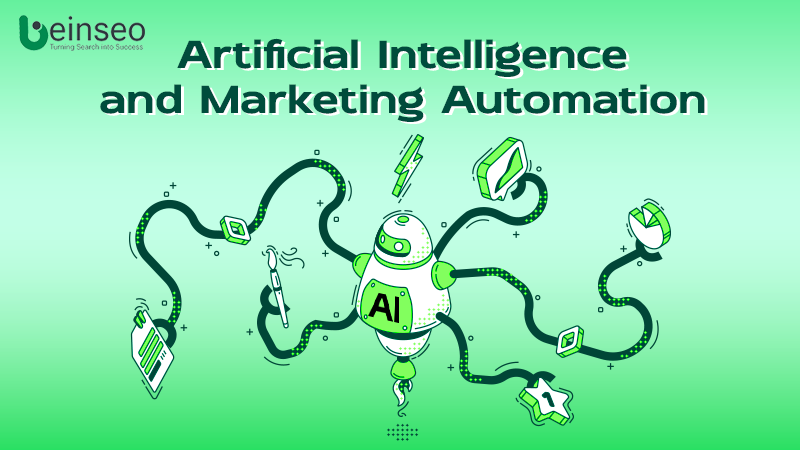
Artificial intelligence and marketing automation are changing how businesses plan, execute, and measure digital marketing campaigns. Instead of handling every repetitive task manually, businesses can use AI-powered tools to analyze customer behavior, personalize content, automate communication, and make faster data-driven decisions.
The Role of AI in Digital Marketing
AI can process large amounts of customer and campaign data to identify patterns and useful insights. Marketers can use these insights to better understand their audiences, improve content, and create more relevant campaigns.
For businesses looking to improve their online visibility, combining AI with a strong SEO strategy can also help identify content opportunities, understand search intent, and improve website performance. BeinSEO provides SEO solutions focused on areas such as keyword research, on-page optimization, technical SEO, content, and link building.
How Marketing Automation Helps Businesses
Marketing automation can simplify repetitive activities such as email campaigns, lead nurturing, customer follow-ups, and reporting. This allows marketing teams to spend more time on strategy and creative work while automated systems handle routine processes.
Automation can also help businesses deliver messages at appropriate stages of the customer journey. When combined with useful customer data, this can create a more consistent and personalized experience.
AI, Content and SEO
AI tools are increasingly being used to support content research, optimization, and analysis. However, useful content still needs to address real customer questions and provide genuine value.
Businesses looking to strengthen their website content can explore BeinSEO's content writing services, alongside its wider SEO services. The company lists content creation, local SEO, small business SEO, backlink building, and ecommerce SEO among its services.
Why Automation Should Support Your Strategy
Automation works best when it supports a clear marketing strategy rather than replacing it completely. Businesses still need to understand their audience, choose relevant topics and keywords, review campaign performance, and make decisions based on actual results.
For businesses targeting customers in Dubai, a combination of SEO, content, local search optimization, and other digital marketing activities can help build a stronger online presence. BeinSEO describes its approach as tailored to individual business goals and local market requirements.
Final Thoughts
AI and marketing automation can make digital marketing more efficient by reducing repetitive work, improving data analysis, and supporting more personalized customer experiences. When these technologies are combined with a well-planned SEO strategy and valuable content, businesses can build a more organized and measurable digital marketing process.
Digital marketing is constantly changing as businesses look for faster, smarter, and more effective ways to reach customers. Two technologies playing an increasingly important role in this change are artificial intelligence (AI) and marketing automation.
AI can help businesses analyze large amounts of data, understand customer behavior, personalize content, and identify patterns that may be difficult to find manually. Marketing automation, meanwhile, helps businesses automate repetitive activities such as email campaigns, lead nurturing, customer follow-ups, and audience segmentation.
When used together, AI and marketing automation can help businesses create more consistent and data-driven marketing processes. However, technology works best when it supports a clear marketing strategy rather than replacing the fundamentals of good content, SEO, customer research, and communication.
For businesses looking to improve their online visibility, working with an experienced SEO company in Dubai can help connect these technologies with a broader digital marketing strategy.
What Is Artificial Intelligence in Digital Marketing?
Artificial intelligence refers to computer systems that can perform tasks that traditionally require human intelligence, such as analyzing information, recognizing patterns, generating content, and making predictions based on available data.
In digital marketing, AI can be used to analyze customer interactions, identify trends, personalize experiences, assist with content creation, and support advertising optimization.
For example, an online store can use customer behavior data to identify products that may be relevant to a particular visitor. A marketing team can also use AI tools to analyze search trends and identify potential topics for future content.
AI does not eliminate the need for marketers. Instead, it can help marketers process information faster and spend more time on strategy, creativity, and decision-making.
What Is Marketing Automation?
Marketing automation is the use of software to automate repetitive marketing activities.
Instead of manually sending every email, updating every lead, or following up with every customer, businesses can create workflows that perform certain actions automatically when specific conditions are met.
Common examples include:
Automated email campaigns
Welcome emails
Lead nurturing
Customer follow-ups
Audience segmentation
Abandoned-cart emails
Appointment reminders
Retargeting campaigns
Customer surveys
Social media scheduling
The goal is not simply to automate everything. The goal is to make marketing processes more organized and consistent while allowing teams to focus on activities that require human judgment.
How AI and Marketing Automation Work Together
AI and automation become more useful when they are combined.
Marketing automation can handle the execution, while AI can help with analysis, personalization, and decision support.
For example, imagine that a customer visits a website several times but does not make a purchase. An automated marketing system could trigger a follow-up email. AI could help determine which type of content or offer may be most relevant based on the customer's previous interactions.
This creates a marketing process that can respond to customer behavior rather than sending the same message to everyone.
The combination can be particularly useful for businesses managing large audiences, multiple marketing channels, or large volumes of customer data.
AI-Powered Personalization
Personalization is one of the most visible applications of AI in digital marketing.
Traditional marketing often relies on broad audience categories. AI can analyze additional behavioral signals, such as pages visited, previous interactions, purchase history, and engagement patterns.
Businesses can then use these insights to create more relevant experiences.
For example, an ecommerce business may recommend products based on previous browsing behavior. A service business could personalize follow-up communication based on the service a visitor showed interest in.
Better personalization can make marketing communication more relevant, but businesses should still consider privacy, data quality, and the appropriate use of customer information.
AI for SEO and Content Marketing
AI is also becoming increasingly relevant to search engine optimization and content marketing.
AI-powered tools can assist marketers with tasks such as:
Keyword research
Topic discovery
Search-intent analysis
Content outlines
Competitor research
Content optimization
Data analysis
Content personalization
However, AI-generated content still needs human review.
Search-focused content should answer the user's question clearly, provide useful information, demonstrate relevant expertise, and avoid producing generic pages simply to target keywords.
This is why a strong SEO strategy should combine technology with keyword research, technical optimization, useful content, internal linking, and ongoing analysis.
Marketing Automation and Lead Nurturing
Not every website visitor is ready to become a customer immediately.
Some visitors may be researching their options, comparing prices, or simply learning about a product or service. Marketing automation allows businesses to continue communicating with these potential customers without requiring marketers to manually manage every interaction.
For example:
Step 1: A visitor downloads a useful guide.
Step 2: The visitor enters an automated email sequence.
Step 3: The next email provides additional information related to their interest.
Step 4: The system identifies engagement based on actions such as email clicks or website visits.
Step 5: Highly engaged leads can be passed to the sales team for further communication.
This process can help businesses maintain consistent communication throughout the customer journey.
AI in Paid Advertising
AI can also support paid advertising campaigns by helping marketers analyze audiences, identify patterns, and optimize campaign performance.
Paid advertising platforms increasingly use automated systems to assist with bidding, audience targeting, and campaign optimization.
Businesses can combine these capabilities with professional campaign management to continually test advertisements, audiences, keywords, and landing pages.
For companies using paid search or social advertising, BeinSEO also provides PPC services in Dubai, covering areas such as Google Ads, social media advertising, remarketing, and ecommerce PPC campaigns.
AI can assist with optimization, but successful advertising still depends on factors such as the offer, landing page, targeting strategy, creative quality, and overall campaign objective.
Benefits of AI and Marketing Automation
When implemented correctly, AI and automation can provide several practical benefits.
1. Save Time
Automation can reduce the amount of time spent on repetitive marketing activities. Teams can create workflows that handle routine communication while employees focus on higher-value tasks.
2. Improve Personalization
AI can help businesses understand customer behavior and create more relevant experiences for different audience segments.
3. Support Data-Driven Decisions
AI can process large datasets and identify patterns that can support marketing decisions.
4. Maintain Consistent Communication
Automated workflows can help businesses communicate with leads and customers at appropriate stages of the customer journey.
5. Improve Marketing Efficiency
When repetitive processes are automated, businesses can potentially manage more marketing activity without increasing manual workload at the same rate.
6. Connect Different Marketing Channels
Automation can connect activities across email, websites, advertising, CRM systems, and other platforms, creating a more coordinated marketing process.
The Role of Human Expertise
Despite the rapid development of AI, human expertise remains important in digital marketing.
AI can analyze information and generate suggestions, but it does not automatically understand every business's goals, audience, brand voice, market conditions, or competitive environment.
Human marketers are still responsible for asking important questions:
Who are we trying to reach?
What problem are we solving?
What makes our business different?
What information does the customer need?
Which channels are most relevant?
How should the campaign be measured?
AI should therefore be viewed as a tool that supports marketing teams rather than a complete replacement for strategy.
BeinSEO's About Us page explains its focus on SEO expertise, customized strategies, local market knowledge, and the use of technology as part of its approach.
AI, Automation, and Local Businesses
Small and local businesses can also benefit from automation and AI.
A local business may use automated systems to follow up with enquiries, schedule communications, collect reviews, or segment customers.
At the same time, AI can help analyze local search trends and customer behavior.
However, local businesses should not neglect their basic online presence. Search visibility still depends on fundamentals such as relevant website content, technical SEO, local optimization, authoritative links, and a positive user experience.
Businesses interested in improving their visibility can explore BeinSEO's Local SEO services as part of a broader digital marketing strategy.
AI Does Not Replace Good Content
One of the biggest mistakes businesses can make is assuming that AI automatically produces effective marketing content.
Generating text is only one part of content marketing.
Useful content should have a clear purpose and satisfy the searcher's intent. It should be accurate, easy to understand, original where appropriate, and genuinely useful to the target audience.
Human editing is particularly important when content involves specialized information, business claims, statistics, or recommendations.
Businesses that need professional website copy can also explore content writing services from BeinSEO, where content can be incorporated into a broader SEO strategy.
AI and the Future of Digital Marketing
AI and marketing automation are likely to become increasingly integrated into everyday marketing workflows.
Businesses can expect greater use of automated customer journeys, predictive analytics, personalized experiences, conversational systems, automated reporting, and AI-assisted content and campaign optimization.
At the same time, marketers will need to pay greater attention to data quality, privacy, accuracy, transparency, and the overall customer experience.
The businesses that benefit most from these technologies will not necessarily be those using the largest number of AI tools. Instead, effective implementation will depend on choosing the right technology for a specific business objective.
How Businesses Can Get Started
Businesses do not need to automate their entire marketing operation at once.
A practical approach is to start with one repetitive process.
For example:
Identify a repetitive marketing task.
Determine whether automation can improve the process.
Choose a suitable platform or tool.
Create a simple workflow.
Monitor the results.
Make adjustments based on real data.
Gradually expand automation to other processes.
The same principle applies to AI. Instead of adopting AI simply because it is popular, businesses should identify where AI can solve a specific problem or improve an existing process.
Conclusion
Artificial intelligence and marketing automation are changing the way businesses approach digital marketing. AI can help analyze data, personalize experiences, identify patterns, and support marketing decisions, while automation can streamline repetitive processes and maintain consistent communication.
But technology alone does not create an effective marketing strategy. Businesses still need strong SEO, useful content, accurate audience research, effective advertising, and a clear understanding of customer needs.
When AI and automation are combined with these fundamentals, businesses can create more organized, responsive, and data-informed marketing processes.